Star Maiden - Maiden of Fate itself?
Layla is one of the most enigmatic characters in Genshin Impact, yet her significance often goes unnoticed. Despite being an early Sumeru character with limited story content, I believe Layla is a core pillar in the unfolding lore of Teyvat. Below is a detailed theory exploring her lineage, design, alternate persona, and how she connects to the Seelie angels, Hyperborean mythos, and potentially major upcoming events in the game.
\*Who is Layla? Canonical Facts
Layla is a Rtawahist student specializing in Theoretical Astrology at the Sumeru Akademiya’s Darshan of Illuminationism.
She is heavily sleep-deprived due to academic stress, leading to chronic exhaustion and sleepwalking.
During sleepwalking, an alternate personality—energetic, confident, and witty—manifests, completing Layla’s thesis work and solving complex problems.
Layla is unaware of this persona, referring to her phenomenon as a “blessing from the stars.”
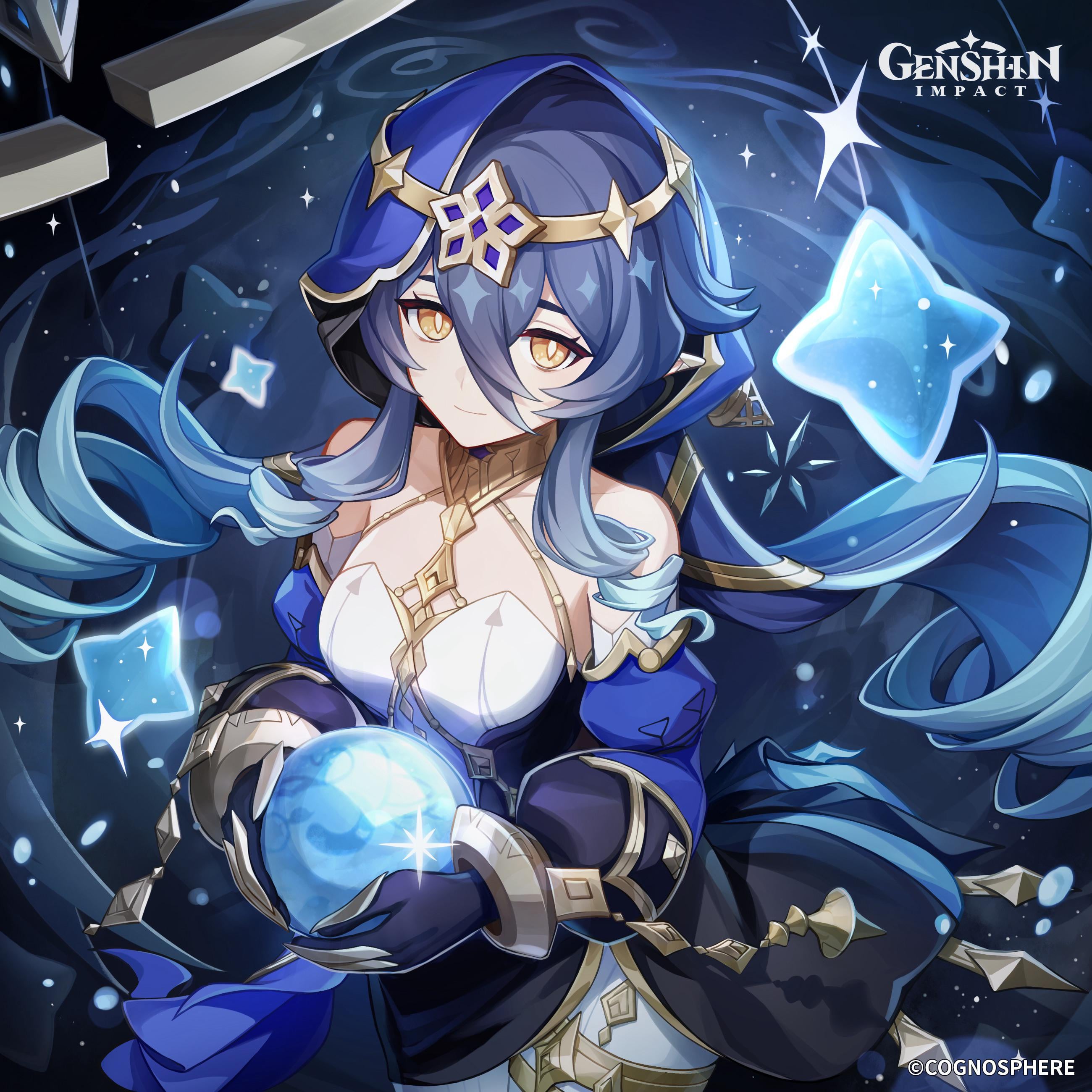
She has fair skin, golden eyes with white pupils, dark blue hair fading lighter at the tips, and distinct, pointed fae-like elf ears.
Layla’s constellation is Luscinia — meaning “Nightingale”—symbolizing a connection to the night and stars.
Her story emphasizes her perseverance, brilliance, and the mysterious “Stars’ Blessing” that aids her work.
\*Layla’s Alternate Persona: Angel? Faerie? Istaroth?
They share striking physical similarities, including identical eyes and symbolic crowns/halos.
Istaroth’s presence is hinted through Layla’s anecdotes and voice lines, suggesting a shared consciousness or possibly a spiritual possession.
The name Istaroth itself carries mythological weight, recalling ancient demonology and celestial beings, potentially indicating a supernatural or otherworldly origin.
The name Istaroth is reminiscent of Astaroth, a prominent figure in various ancient mythologies and demonologies, often depicted as a powerful spirit or demon with connections to wisdom, knowledge, and forbidden secrets. This association lends a layer of supernatural and esoteric significance to the character, suggesting she could embody hidden wisdom or a deeper, otherworldly consciousness within Layla.
In many traditions, Astaroth is considered a fallen angel or demon with ties to celestial origins, reinforcing the possibility that Istaroth might not be merely a human personality but a manifestation of an angelic or fae entity—one that bridges the mortal realm with the divine or mystical. This aligns with Layla’s thematic connection to stars, dreams, and cosmic forces, potentially making Istaroth an ancient guardian, a spirit guide, or a fragmented piece of a celestial being.
Moreover, the contrast between Layla’s exhausted, mortal self and the confident, enigmatic nature of Istaroth hints at a duality that echoes mythological concepts of possession, spiritual inheritance, or the coexistence of mortal and divine consciousness within a single vessel. Istaroth’s name evokes this blend of light and shadow, wisdom and mystery, anchoring her firmly within the rich tapestry of Teyvat’s mythos and opening the door to possibilities such as a jinn/fae heritage or a direct link to the Seelie angels.
\*Connections to Columbina, Canon, and the Hyperboreans
Columbina shares thematic and visual parallels with Layla: both exhibit star/moon symbolism, sleepy or melancholic traits, and fae-like qualities.
Columbina’s name, Hyposelenia, means “born under the moon,” complementing Layla’s night-themed identity.
Both characters might relate to a mysterious fourth moon theorized in Sumeru lore.
Canon, another related character, fits into this celestial motif as well, linking the trio through shared cosmic and mythological symbolism.
Hyperboreans — a race connected to celestial beings and ancient myths in Teyvat — may form the ancestral root for Layla, suggested by her gold accessories and connection to Snowland Fae symbolism.
Layla’s family could have ties to the refugees from Hyperborea, linking her to powerful mystical lineages.
\*Layla and the Seelie Angels: Myth and Lore
Seelie are devolved angels in Teyvat, created by the Heavenly Principles as divine envoys to guide humanity.
These beings were cursed to lose their minds and bodies if they loved one individual more than all equally, becoming mindless spirits.
Layla’s design, her star crown, and her dream sphere echo the halos and symbolism associated with Seelie angels like Nabu Malikata, a figure tied to the creation of Jinn and Khvarena.
The Seelie’s origins link to real-world angelic and fae mythologies, intertwining divine justice, cosmic balance, and human fate.
Layla’s talisman from her mother resembles Snowland Fae artistry, suggesting a direct connection to these angelic/ fae creations.
This symbolism hints that Layla’s role in the story could bridge the human world, celestial realms, and ancient cosmic powers.
\*Speculations on Layla’s Role and Where She Really Is
Layla’s absence from major story quests (especially Sumeru Archon quests) and her restricted content suggests HoYoverse is deliberately saving her narrative reveal for future events.
Possible connections to Nod Krai and Sheznaya might expand her lore, especially considering her mother’s mysterious origins and her talisman’s symbolism.
The theory of her being a refugee from Hyperborea or a relative to celestial beings strengthens her potential role in bridging past ancient powers and the current Archon War aftermath.
Her sleepwalking and alternate personality could be metaphors for a split identity or spiritual duality, reflecting her deeper connection to cosmic forces and lost angelic heritage.
\*Real-World Mythological Inspirations
Layla’s name means “born at night” in Arabic, directly tying her to lunar and night symbolism found in many cultures.
Istaroth echoes names from demonological and celestial lore, hinting at a blend of light and dark spiritual dualities.
The Seelie Angels draw from European fae and angel myths, transformed into a cosmic narrative about balance, love, and divine punishment.
The “Nightingale” constellation (Luscinia) symbolizes music, prophecy, and mysticism in folklore, underscoring Layla’s role as a conduit between dreams and reality.
Layla is not just an overworked student with sleep troubles. She is a living enigma layered with cosmic importance, ancestral legacy, and celestial mystery. Her connection to Istaroth, the Seelie angels, Hyperboreans, and the night sky positions her as a character pivotal to understanding upcoming storylines in Genshin Impact. Far from a side character, Layla could well be a key to unlocking ancient powers, celestial conflicts, and the true fate of Teyvat.
On her birthday (December 19th) she was the only one to have mentioned the issues regarding the moons directly to us in the mail, which I feel is just foreshadowing for her to make an appearance…
Commentaires
Also didn't we find out in the Sumeru event that Layla is a descendant of Tullaytullah?
And even if proven true this would still connect her to Nabu Malikata and the angels, so..?
Could there be more there? Sure. But there is really no evidence whatsoever so far. I imagine they explicitly mentioned Tullaytullah in the event to finally give a bit of backstory to Layla.
And you say "spell check" but that's not what that is. That entire wall of text was completely generated by ChatGPT. It's obvious since AI has a specific way of writing. If it were just "spell checking" then it wouldn't completely change the structure and vocabulary of the sentences, would it?
And where am I "attacking" "your" character? Layla's a cool character sure, but I haven't seen anything convincing in this post. Hoping she’ll be important in the future is fine, but that doesn’t make these connections any less speculative